
Ransomware recovery costs go far beyond the ransom payment, with hidden expenses like downtime, lost productivity, and legal fees making up the real total. Focusing only on the ransom leaves businesses unprepared for the true financial impact.
When ransomware hits, the bill that follows rarely stops at the ransom demand. Downtime, lost orders and emergency IT work pile on top, often dwarfing the figure the attackers asked for.
On average, the cost to recover from these attacks – without paying the ransom – totaled more than $732,520 in the US, which included business downtime, lost orders, operational costs, device costs, and other expenses. That figure alone explains why so many businesses misjudge what they're up against: attention goes to the ransom, while the larger expense builds quietly in the background. A single overlooked detail in those early hours can multiply the total cost before the incident is anywhere near resolved.
Decrypting files or restoring backups is only the visible layer of ransomware recovery. Underneath sits a process that touches lost productivity, technical repair work and the slower job of rebuilding trust with clients and partners.
So the real planning question isn't "how much is the ransom" but "what does the full recovery actually involve." Mapping every cost category in advance is the only reliable way to avoid a far nastier surprise later.

Beyond the ransom: Why the real costs are easy to miss
Most businesses brace for a ransom demand or a data recovery bill, assuming that covers the worst of it. In practice, the first hours after an attack are chaotic enough that attention narrows to the most visible problem – getting data back – while quieter, equally damaging expenses build unnoticed.
Downtime is a prime example: it routinely runs longer than anyone expects. Systems can stay offline for days while IT teams investigate, clean infected devices and restore operations, and every one of those days means lost orders and idle staff.
Once systems are down, operational costs climb just as fast. Outside experts may need to be brought in, staff may work overtime, and damaged devices may need replacing outright. None of this depends on whether the ransom is ever paid.
The many faces of ransomware recovery: Breaking down the true expenses
Because these costs stack up in stages rather than all at once, it helps to see ransomware recovery as a series of distinct steps, each with its own price tag attached.
1. Immediate response and containment
Stopping the spread comes first, which usually means disconnecting affected systems, pausing operations and launching a forensic investigation. Every hour spent on containment is an hour the business isn't running as usual.
2. Technical investigation and ransomware removal
From there, IT teams or outside specialists need to identify the ransomware variant, trace its entry point and clear it from every device. Modern ransomware strains make this slow, specialised work.
3. Data recovery and system restoration
Even with a backup in hand, restoring data is rarely instant: backups need checking for cleanliness, files need recovering, and systems need testing before they go live again. Should those backups turn out incomplete or infected themselves, the timeline stretches further still.
4. Communication and reputation management
Once systems are stabilising, attention turns outward to clients, suppliers and sometimes the public, who need to be kept informed. Legal or regulatory disclosure requirements, strict in places like Melbourne, add further time and resources to the communication effort.
5. Legal, compliance, and insurance costs
Alongside communication, legal advice is often needed for regulatory reporting, insurance claims or negotiations with the ransomware group itself. Insurance may offset some of this, though excesses and exclusions frequently limit how much it actually covers.
6. Long-term security improvements
Once the immediate crisis passes, most businesses turn to stronger ransomware protection to avoid a repeat. New software, staff training and a revised recovery plan typically follow.
How downtime and lost productivity drive up the bill
Of every cost category above, downtime tends to be the most expensive. While systems sit offline, staff can't access files, process orders or respond to customers, and even a few hours of this can translate into lost revenue and frustrated clients.
The damage doesn't end when systems come back online, either. Work has to be redone, lost orders chased up, and unhappy customers managed, so productivity rarely snaps back immediately – the longer recovery drags on, the further these costs compound.
In Melbourne specifically, where competition is tight and clients expect fast responses, even a brief outage can strain relationships that took years to build. Budgeting for downtime deserves the same attention as budgeting for the technical fix.
Ransomware recovery: What your budget should really include
Given how many stages are involved, a recovery budget focused only on technical fixes is already incomplete. A fuller budget accounts for:
- Incident response: Costs for IT staff, external experts, and emergency actions to contain the ransomware.
- System cleaning and ransomware removal: Expenses for cleaning infected devices, reinstalling software, and ensuring systems are safe.
- Data recovery: Time and resources needed to restore files, test backups, and verify data integrity.
- Business interruption: Lost revenue, delayed projects, and overtime for staff working to catch up.
- Legal and compliance: Fees for legal advice, regulatory reporting, and any required notifications.
- Communication: Resources for informing clients, suppliers, and staff, plus any public relations support.
- Security upgrades: Investments in new tools, training, and changes to your ransomware recovery plan to prevent future incidents.
Skipping even one of these categories can leave a business financially exposed in ways the original plan never accounted for.
Why paying the ransom isn’t the end of your expenses
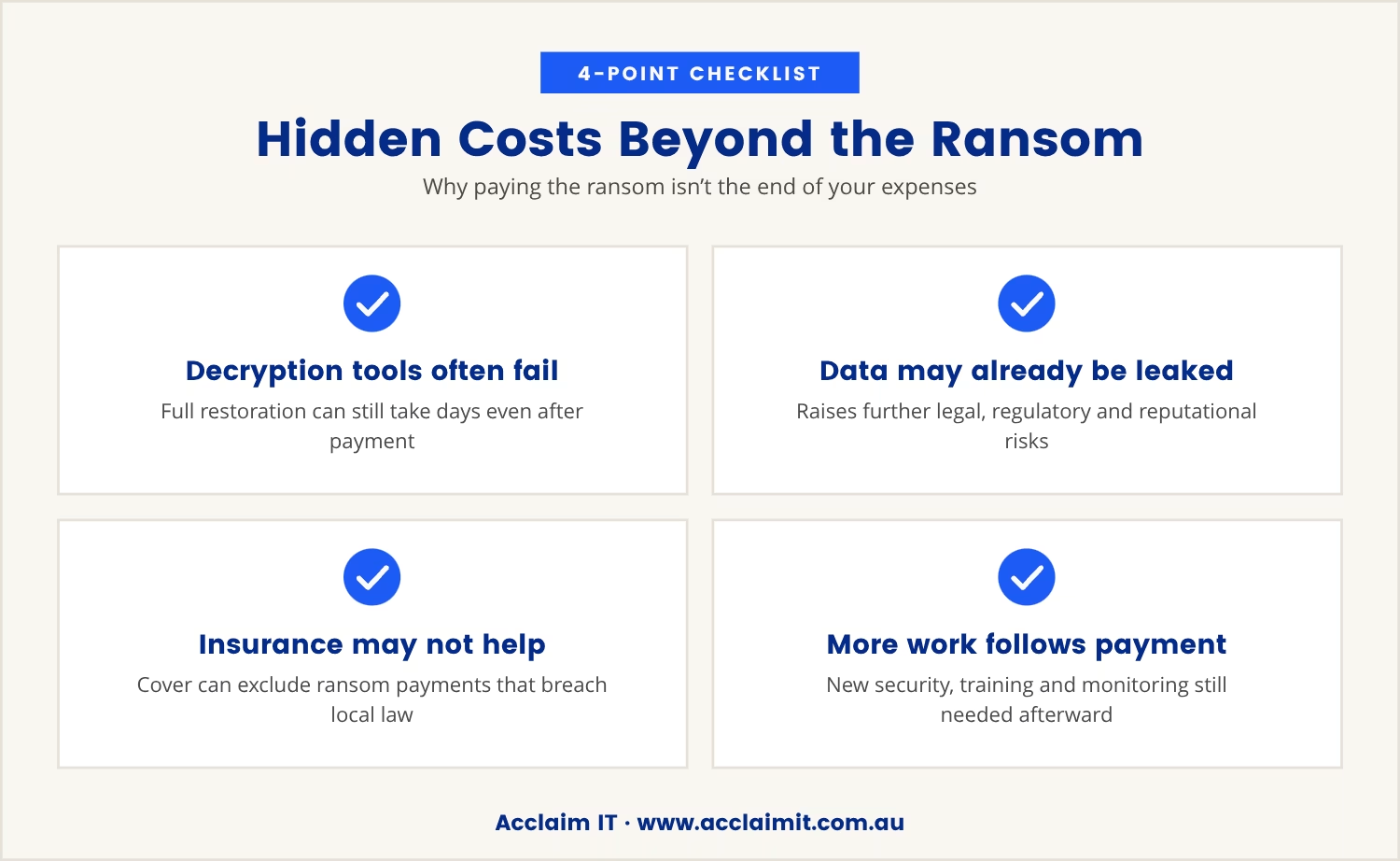
It follows, then, that paying the ransom is rarely the shortcut it appears to be. Decryption tools handed over by attackers often work imperfectly, meaning full system restoration can still take days even after payment.
Worse, there's a real risk that sensitive data was copied or leaked before decryption took place, which opens the door to further legal, regulatory and reputational costs. Insurance, on top of that, may not cover ransom payments at all, particularly where the payment itself breaches local or international law.
Even once files are unlocked, new security measures, staff training and ongoing monitoring are still needed to guard against a repeat attack. The ransom, in other words, is just one line item in a much longer bill.
Lessons for your next ransomware response and recovery plan
With all these costs in view, a strong recovery plan needs to do more than lay out technical steps – it needs to prepare the business for the full financial picture an attack creates.
Start by reviewing the current plan: does it account for downtime, lost revenue, legal fees, and communication needs? Are backups tested regularly, and is there a clear sense of how long a full restore would actually take?
If the plan hasn't been revisited recently, that gap is worth closing now, because the true cost of a ransomware attack almost always exceeds the ransom itself. Planning for every stage of recovery remains the surest way to avoid being caught off guard.

What to do when the real costs of ransomware hit
If your business has 20 to 100 users, you know that a ransomware incident can disrupt more than just your files—unexpected costs can pile up fast. At Acclaim IT, we understand how stressful it is to face these challenges without a clear plan.
We invite you to see how our team approaches ransomware recovery and helps businesses in Melbourne prepare for every stage of the process. Let’s talk about what a complete recovery plan could look like for your setup.
Avoid surprise costs with our onboarding offer
Get your onboarding fees waived and enjoy a 90-day satisfaction guarantee when you start with Acclaim IT—so you can focus on recovery, not unexpected expenses.
Frequently asked questions
What are the first steps to take after a ransomware attack?
Disconnect affected systems from the network to stop the ransomware spreading, notify the IT team or provider, and begin a forensic investigation. Hold off on paying any ransom straight away, and focus instead on containing the threat and assessing the damage before any decisions are made.
How can I improve my backup strategy to help with data recovery?
Test backups regularly to confirm they're complete and free of infection, and keep at least one copy offline or in a secure cloud environment. This makes it far easier to recover from a ransomware attack without depending on decryption tools from the attackers.
What costs should I expect beyond the ransom payment?
Expect costs for incident response, system cleaning, data recovery, lost productivity, legal advice, compliance reporting and communication with clients and partners. These add up quickly, even when the ransom itself is never paid.
How do I know if my recovery plan is effective against ransomware?
An effective ransomware recovery plan sets out clear steps for incident response, regular backup testing, staff training and communication protocols. It should be reviewed and updated at least once a year, or straight after any major incident.
Is it safe to use decryption tools from ransomware groups?
Decryption tools supplied by attackers aren't always reliable and may fail to restore all the data. Using them can also risk leaving hidden malware behind or breaching local laws, so restoring from clean backups and working with trusted recovery services is the safer path.