
An IT strategy roadmap delivers real value only when it is built around business priorities, not technology categories. Focusing on outcomes ensures IT investments drive the results your business actually needs.
Picture two businesses, each replacing an ageing server this year. One does it because the hardware is due for retirement; the other does it because a new customer platform depends on it. Only one of these upgrades is likely to move the business forward.
That difference usually traces back to how the IT strategy roadmap was built in the first place. A roadmap organised around categories like servers, applications, and security tends to push upgrades into isolated lanes, each justified by its own internal logic rather than by what the business is trying to achieve. The result is a tidy list of completed projects that, taken together, don't add up to much progress.
A roadmap built the other way round, starting from business priorities rather than technology categories, forces a different question before any purchase is approved: what outcome is this meant to produce? That single shift changes which projects get funded and which get shelved.
Organise IT planning around what the business is actually trying to accomplish, and every investment inherits a clear purpose from day one. Technology stops being a recurring cost and starts acting as a lever for growth.

Why technology-first roadmaps miss the mark
Many organisations start IT planning by listing technology categories first: hardware, software, security, and so on. It feels methodical, yet it tends to splinter the plan into disconnected pieces almost immediately.
Once each category becomes its own mini-project, teams start upgrading for the sake of upgrading. A server refresh happens because the hardware has reached end of life, not because it unlocks a specific business initiative. String enough of these together and the business ends up with a pile of completed tickets but no discernible shift in performance.
That same structure makes prioritisation genuinely difficult. Without a visible line back to a business goal, every proposed upgrade looks equally urgent on paper, so budgets get sliced thin across many fronts and the handful of projects that actually matter compete for leftover funds.
In Melbourne, where margins are tight and competitors are moving fast, that scattershot spending is particularly costly. Money goes out the door, yet leadership struggles to point to what changed as a result.
On top of the budget strain, a technology-first plan resists change. Built around systems rather than outcomes, it has no natural mechanism for adjusting when the business pivots, leaving teams locked into a roadmap that no longer matches reality.
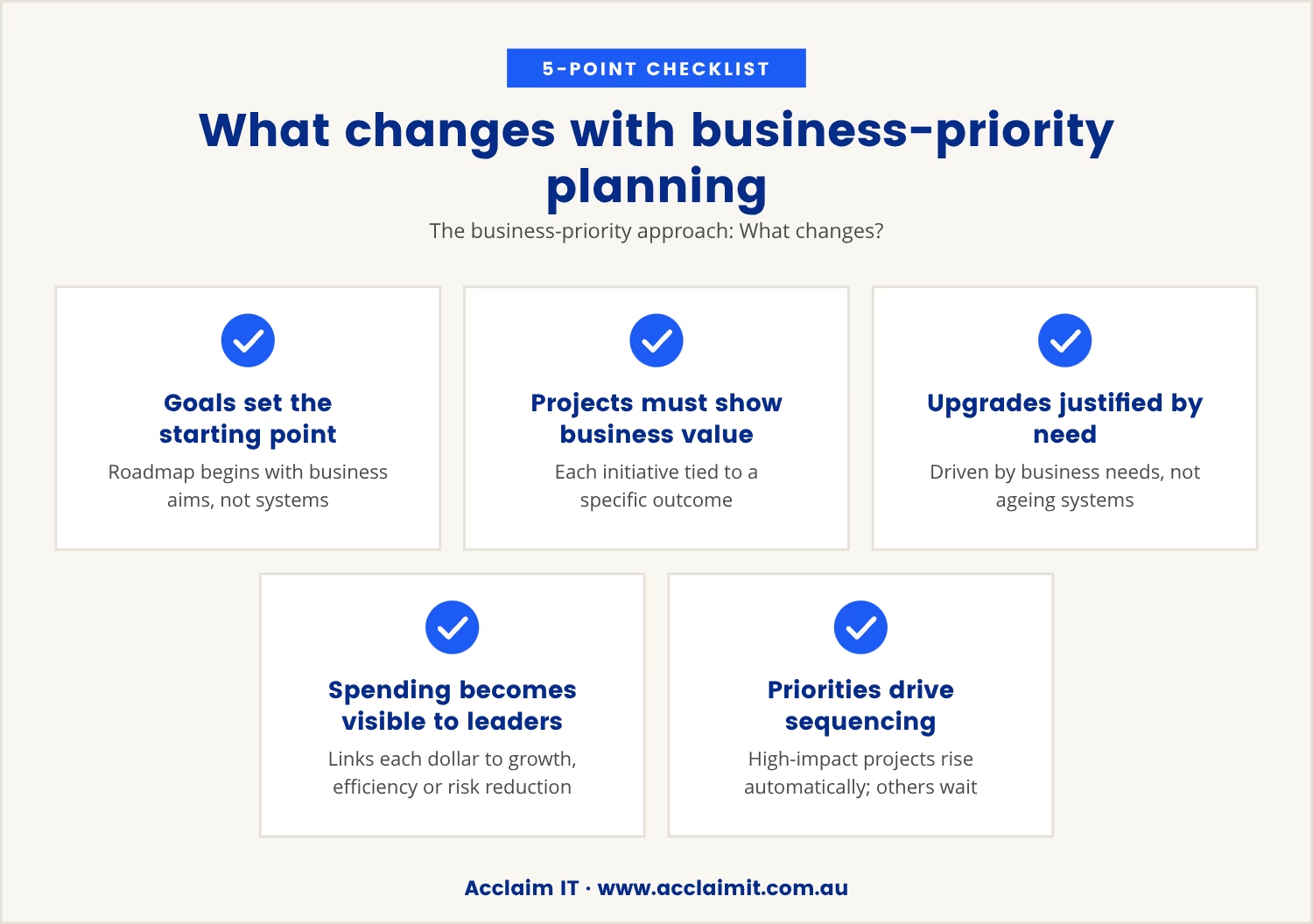
The business-priority approach: What changes?
Flip the starting point and the whole process behaves differently. Rather than opening with a list of systems, the roadmap opens with what the business is trying to achieve, whether that is sharper customer service, entry into new markets, or leaner internal processes.
From there, every technology initiative gets mapped to one of those specific goals, which means a project only earns its place on the roadmap if it can show which business outcome it serves. Upgrades no longer happen because a system is ageing; they happen because the business needs what the upgrade delivers.
That mapping also changes what leadership can see. Instead of a list of systems, they get a line of sight from each dollar spent to the growth, efficiency, or risk reduction it supports, which makes the value of IT far easier to explain to stakeholders who think in business terms rather than technical ones.
Clarity about priorities then does the hard work of sequencing. Projects that move the needle on business results rise to the top of the list automatically, while upgrades with no such link can wait their turn.
How to structure an IT strategy roadmap for business impact
A roadmap built around business priorities follows a noticeably different sequence from a conventional technology plan. The steps below set it up so impact, not activity, drives the schedule.
Identify business goals first
Begin with the company's main objectives for the next one to three years, whether that's revenue growth, better customer satisfaction, or lower operating costs. Each goal needs to be specific enough to measure.
Map technology initiatives to each goal
With goals set, list the technology initiatives that would actually move each one forward. If the goal is better customer service, for instance, a new CRM system becomes the initiative that earns its place on the roadmap.
Prioritise based on business value
Rank initiatives by the weight of business value they carry, not by which technology category they sit in. The highest-impact projects lead the schedule even when they cut across multiple systems.
Set timelines and milestones
Attach a start and finish to each initiative, along with milestones along the way. These markers keep the team accountable and make it obvious early if the roadmap is drifting off course.
Involve stakeholders early
Bring business leaders, department heads, and IT managers into the conversation from the outset. Their input keeps the roadmap anchored to genuine business needs rather than technical preference.
Review and adjust regularly
Because business priorities shift, often faster than any annual plan accounts for, the roadmap needs scheduled check-ins to catch those shifts and adjust course before the plan goes stale.
Common pitfalls when planning around technology categories
Even with good intentions, plans tend to drift back toward a technology-first habit. Watch for these patterns:
- Focusing on upgrades, not outcomes: Replacing systems without a clear link to a business goal usually just burns effort.
- Siloed decision-making: When each department plans its own upgrades in isolation, chances for shared gains slip past unnoticed.
- Overlooking stakeholder input: Leave business leaders out of the process and the roadmap drifts away from what the business actually needs.
- Rigid plans: A technology-focused roadmap struggles to bend when business priorities change direction.
- Budget spread too thin: With no clear hierarchy of priorities, funding gets divided across too many projects and loses its punch everywhere at once.
Portfolio management: Connecting IT investments to strategy
Portfolio management treats every technology initiative as part of one connected group rather than a set of standalone projects. Seen this way, each investment's place in the wider strategy becomes obvious rather than assumed.
That wider view makes it possible to balance short-term fixes against long-term goals in the same breath, and it surfaces overlaps, gaps, or conflicting projects while there's still time to change course, before money is already spent.
Managed well, a portfolio keeps every investment accountable to a business objective it's meant to serve. It also gives the business room to move fast when priorities shift, since resources can be reallocated to wherever they'll count most rather than staying locked into their original project.
Best practice for aligning IT and business in Melbourne
For businesses in Melbourne, lining up IT with business strategy isn't a nice-to-have; it's the difference between keeping pace with competitors and falling behind them. The local market tends to reward companies that put technology to work on outcomes rather than simply keeping the lights on.
One practical step is bringing business leaders into every stage of roadmap planning, since their perspective keeps IT initiatives grounded in what the business actually needs rather than what's technically convenient.
A second step follows naturally: set clear, measurable goals for every project, which makes tracking progress and proving value to stakeholders far more straightforward.
Finally, build in regular reviews so the roadmap can flex as business needs evolve rather than hardening into a plan nobody revisits.

Returning to the core: Why structure matters most
How an IT strategy roadmap gets organised shapes every decision made under it from that point forward. Structure it around business priorities, and each technology investment carries a reason for existing.
That discipline is what keeps budgets from being wasted and keeps IT pointed at outcomes that actually matter to the business. Having a plan was never the hard part; having the right plan, built in the right order, is.

How Acclaim IT helps businesses plan for real outcomes
Many businesses with 20 to 100 users find themselves investing in technology but not seeing the results they expect. At Acclaim IT, we understand how frustrating it can be when IT upgrades don’t translate into business progress.
If you want to see how our team approaches IT planning that delivers real outcomes, or you’d like to talk through your own roadmap, we invite you to get in touch.
Want a risk-free start to your roadmap?
Qualified businesses can get onboarding fees waived and a 90-day satisfaction guarantee when they work with us on their IT planning.
Start with a waived onboarding
Frequently asked questions
How do I know if my current roadmap is too focused on technology?
If the plan is organised by categories like hardware, software, or security, and projects get chosen based on system needs rather than business outcomes, it's likely too technology-focused. Frequent upgrades with no clear tie to business objectives, or trouble explaining IT's value to non-technical leaders, are both telling signs.
What is the first step to create an IT roadmap that supports business priorities?
Work with business leaders to define clear, measurable business goals first. From there, map technology initiatives directly to each goal so every IT project carries a defined purpose tied to company direction.
How often should I review and update my IT strategy roadmap?
Review the roadmap at least every six months, or sooner if business strategy shifts significantly. Regular reviews keep the plan aligned with current needs and allow priorities to be adjusted as circumstances change.
What role do stakeholders play in roadmap planning?
Stakeholders such as department heads and business leaders bring insight into what the business genuinely needs from IT. Their involvement keeps the roadmap grounded in real priorities and helps secure buy-in for the initiatives it contains.
Can portfolio management help prioritise technology initiatives?
Yes, portfolio management brings all technology initiatives into one view, which makes prioritising by business value far more straightforward. It helps ensure resources land on the projects that best serve the strategic plan and support business growth.