Penetration Testing vs Vulnerability Scanning: Are You Paying Experts to Find the Obvious?

Running a penetration test before a vulnerability scan often wastes time and money, as testers end up finding issues automated scans would have revealed. Skipping the proper sequence means you pay expert rates to rediscover basic flaws instead of uncovering advanced threats.
A vulnerability scanner works through a known-issue database, checking every system against it automatically and flagging missing patches, weak configurations and outdated software within hours. A penetration tester works differently: manually, creatively, hunting for ways to chain small weaknesses into a real breach.
Run them in the wrong order and that second process gets swallowed by the first one's job. When businesses weigh penetration testing vs vulnerability scanning, both get treated as equally essential, which they are—but the sequence between them decides whether the money spent actually buys what it should.
Consider what happens when a penetration test runs without a prior scan: the tester's billable hours go toward uncovering basic flaws that automated tools would have surfaced in a fraction of the time. Skip the scan first, and the premium day-rate expertise gets spent pointing out things a scheduled, low-cost tool could have caught on its own.
The two methods aren't interchangeable, and that's precisely why sequencing matters. Vulnerability scans are automated and efficient at surfacing known weaknesses; penetration tests go further, simulating the kind of real-world attack a human adversary would attempt. Once that distinction is clear, the wasted effort and inflated cost of doing things backwards become obvious.
Getting the most from a security budget, then, comes down to understanding how these two assessments slot together—and why running them in the right order changes what each one can deliver.

Why skipping a vulnerability scan first leads to wasted pen test spend
Many businesses treat a penetration test as the default starting point, assuming it's simply the more rigorous option. Skip the scan beforehand, though, and most of that tester's engagement goes toward surface-level issues rather than the deeper work the exercise is meant for.
A vulnerability scan relies on automated tools checking systems against known weaknesses, and because the process is scripted, it's fast, repeatable and easy to schedule on a regular cycle. It's this automation that catches misconfigurations, missing patches and the common flaws attackers routinely exploit.
Bypass that step and a penetration tester ends up rediscovering the same issues manually—meaning high day rates get spent on work a scanner could have handled in minutes. Testers get bogged down in the basics instead of chasing advanced threats.
The genuine value of a penetration test lies in finding how a hacker could chain several vulnerabilities together or slip past defences in ways no automated tool would anticipate. That only becomes possible once the obvious problems are already cleared away; otherwise the engagement never reaches the level of insight it's capable of.
What a vulnerability scan actually delivers
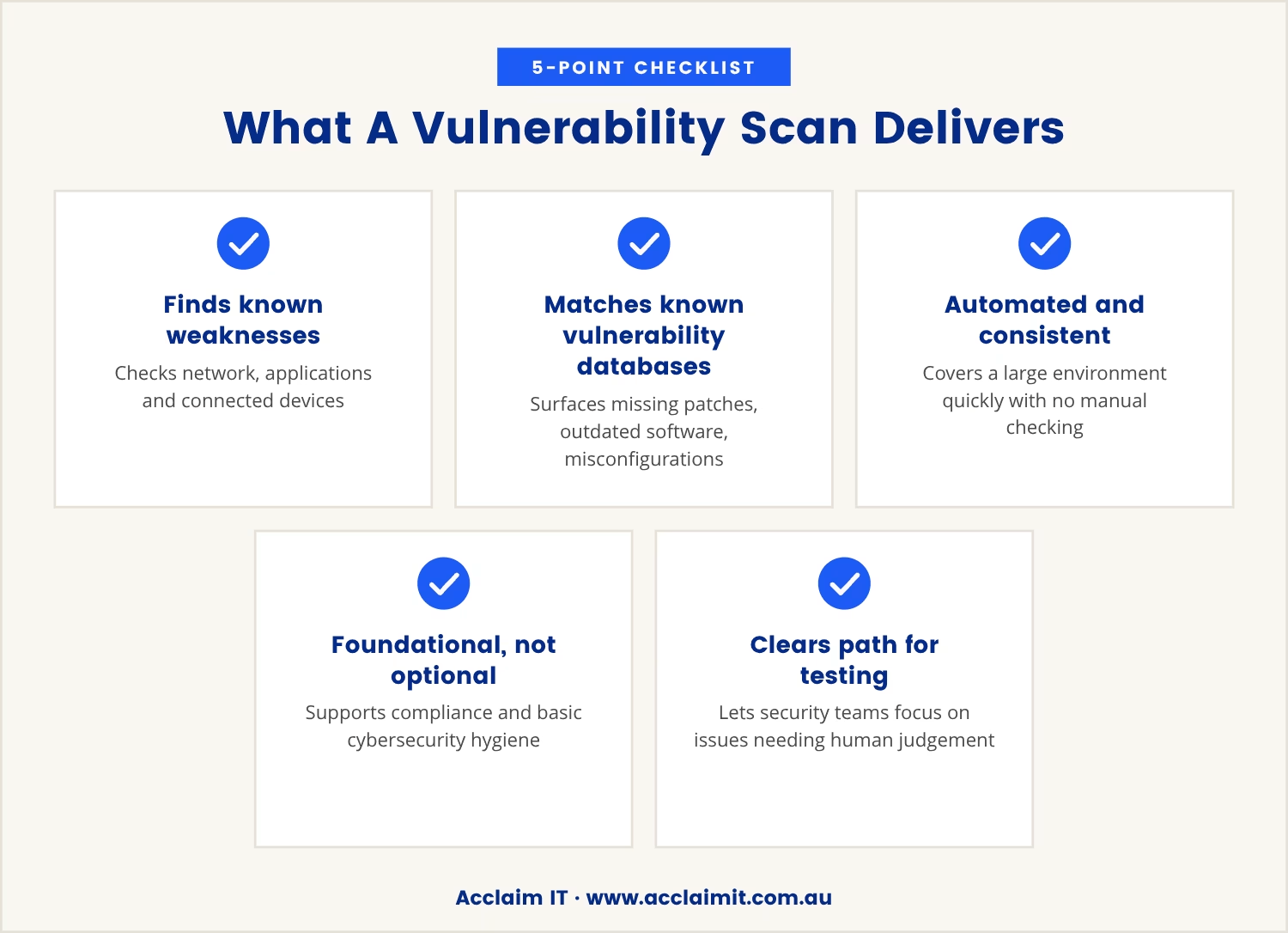
Far from a box-ticking exercise, a vulnerability scan is a practical way to identify known security weaknesses across a network, its applications and its connected devices.
The scan works by comparing systems against databases of known vulnerabilities, which is how it surfaces missing patches, outdated software and misconfigurations. Because the whole process is automated, it covers a large environment quickly and consistently, with no manual checking required.
For a business in Melbourne, running these scans on a regular basis is a straightforward way to stay on top of cybersecurity fundamentals, and it also happens to satisfy many compliance standards—making it a foundational layer rather than an optional extra.
Handling these routine checks first clears the path for more advanced testing later. A security team is then free to focus on issues that genuinely need human judgement, rather than burning time on what a tool would have flagged anyway.
Penetration testing vs vulnerability scanning: Where the real difference lies
Depth and intent separate the two assessments, and that distinction becomes clearer when set side by side:
- Vulnerability scan: Automated, broad, and designed to find known issues quickly across many systems.
- Penetration test: Manual, targeted, and focused on simulating real-world attacks to uncover complex weaknesses.
- Cost and time: Scans are typically lower cost and faster to run, while penetration tests are more expensive and take longer due to their depth.
- Output: Scans produce a list of vulnerabilities; pen tests provide a narrative of how an attacker could exploit those weaknesses.
- Best use: Scans are best for regular checks and compliance; pen tests are best for testing defences after the basics are covered.
Run the scan first, and the testers who follow are free to concentrate on exactly what they do best: finding the gaps no automated tool would ever notice.
What penetration testers want you to fix before they start
Penetration testers do their best work when advanced threats are the focus, not basic misconfigurations left unresolved. Before an engagement begins, they typically expect the following already sorted:
Patch management
Every system should be current with the latest security patches, since unpatched software remains one of the easiest targets around.
Default credentials
Default usernames and passwords should be changed or removed entirely, given they're among the first things any attacker tries.
Open ports and unnecessary services
Ports that serve no purpose should be closed and unneeded services disabled, because each one left open is a potential way in.
Weak encryption
Strong encryption needs to cover data both in transit and at rest, since outdated protocols make interception far too easy.
Misconfigured firewalls
Firewalls should block unnecessary traffic by default, allowing through only what day-to-day business operations actually require.
Unsecured web applications
Common flaws such as SQL injection or cross-site scripting ought to be checked and addressed before a pen test ever begins.
Incomplete asset inventory
Every device and application should be identified and accounted for, since anything unknown becomes a blind spot in the wider security picture.
Clearing these through a vulnerability assessment first is what allows the penetration test that follows to deliver genuine value.
The cost impact: Why pen test cost rises when scans are skipped
Penetration testing represents a serious investment, particularly for businesses with 20 to 100 users, and that cost reflects the time and expertise needed to probe systems in real depth.
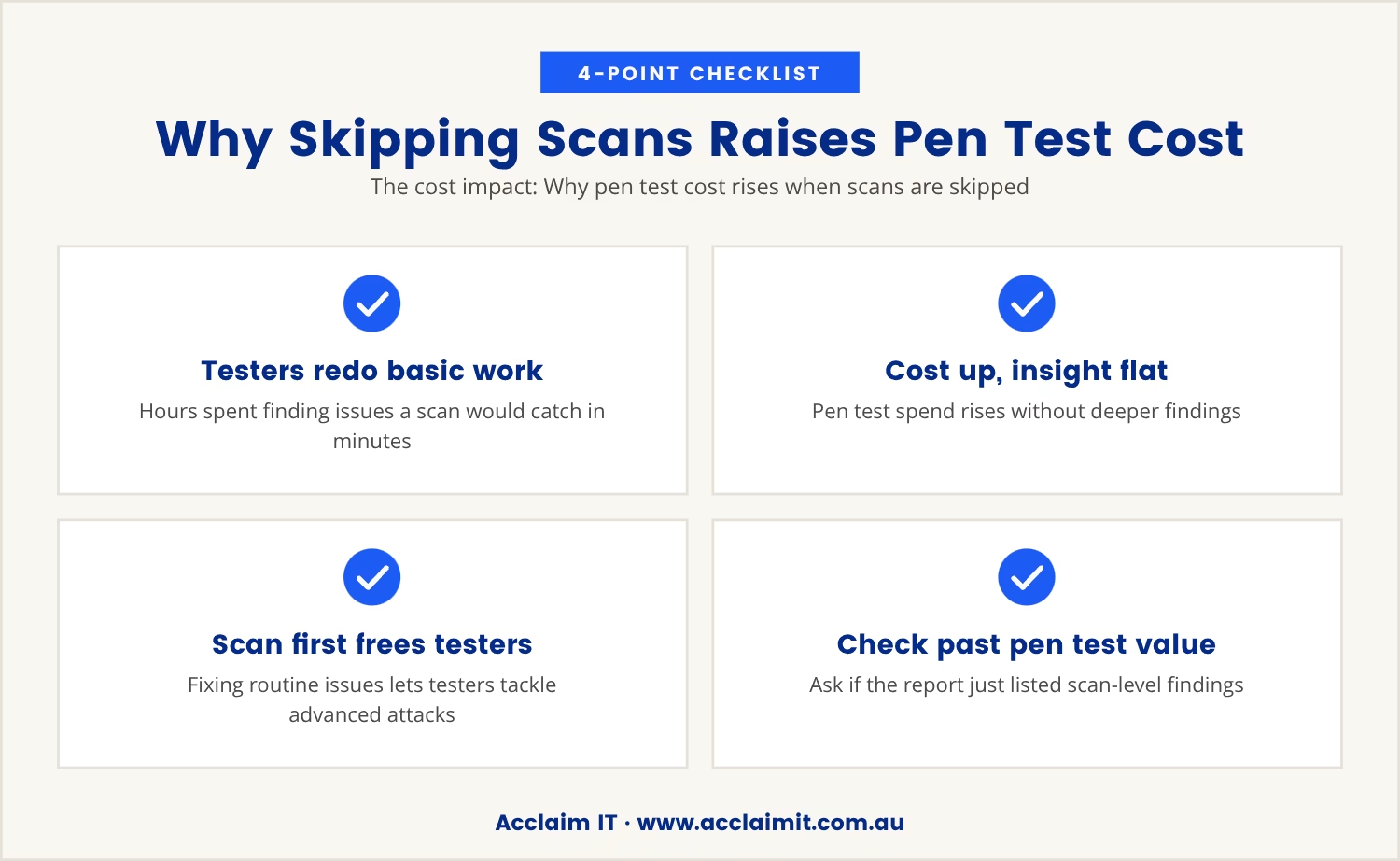
When a tester spends hours or entire days uncovering issues a vulnerability scan would have flagged in minutes, the money spent buys far less than it should. Pen test cost climbs upward while the insight delivered stays stuck at a basic level.
Run a vulnerability scan beforehand, by contrast, and routine problems get fixed ahead of time—freeing the penetration testers to concentrate on advanced attack scenarios and making far better use of both their skills and the budget allocated to them.
Anyone unsure whether a previous pen test delivered real value might ask: did the report mostly list issues an automated scan would have caught anyway? If so, a premium price was likely paid for work that a cheaper tool could have handled.
How to sequence vulnerability management for maximum value
Getting the order right isn't only about saving money—it's what builds a genuinely stronger security posture over time. A sequence like this works for most businesses:
- Step 1: Perform a vulnerability scan using automated tools to find and fix known issues.
- Step 2: Remediate the vulnerabilities found, prioritising those with the highest risk.
- Step 3: Once the basics are covered, schedule a penetration test to simulate real-world attacks.
- Step 4: Use the findings from the pen test to strengthen defences against complex threats.
- Step 5: Repeat the process regularly, updating your approach as your environment changes.
Followed in order, this is what lets a business draw full value from both vulnerability scanning and penetration testing, with no resources lost to duplicated effort.
What businesses risk by reversing the order
Run a penetration test before a vulnerability scan and both assessments end up delivering less than they should. The tester's time goes toward routine issues, while the business pays more money for a shallower result.
Worse, this approach can manufacture a false sense of security: if the pen test only turns up basic flaws, it's easy to assume the systems are safe when deeper issues remain completely untested. Left unaddressed, that gap can leave a business exposed to exactly the attacks automated tools were never going to detect.
Sequencing security assessments properly means each step builds on what came before it, which is what ultimately saves money while also strengthening the business's overall cybersecurity posture.

How Acclaim IT helps you get more from your security budget
For businesses with 20 to 100 users, it’s easy to wonder if your last security assessment delivered real value. At Acclaim IT, we know that getting the sequence right can make all the difference.
We invite you to see how our approach ensures your penetration testing investment is focused where it matters most—or to start a conversation about your own setup.
Save on onboarding and guarantee your satisfaction
Get onboarding fees waived and a 90-day satisfaction guarantee when you choose Acclaim IT for your security assessments—available to qualifying businesses.
Frequently asked questions
How often should a business perform a vulnerability scan?
Quarterly scanning is a reasonable minimum for most businesses, though monthly scans suit environments that change frequently. Regular scanning catches new vulnerabilities as they appear, keeping defences current rather than reactive.
What is the main benefit of a penetration test after scanning?
Testers get to focus on complex attack paths and advanced threats rather than spending time on basic issues already resolved. The result is deeper insight and recommendations that are genuinely actionable.
Can automated tools replace manual penetration testing?
Automated tools excel at finding known vulnerabilities quickly, but they can't replicate the creativity and adaptability a human tester brings to the task. Manual penetration testing remains essential for uncovering unique or complex weaknesses that no script would anticipate.
How do I know if my vulnerability assessment is effective?
A strong vulnerability assessment identifies a broad range of issues, ranks them by risk and lays out clear remediation steps. Seeing the same issues resurface across multiple reports is usually a sign the vulnerability management process needs a second look.
What types of security assessments should a business consider?
A mix of vulnerability assessments, penetration tests and regular security reviews covers the most ground, since each serves a distinct purpose. Combined, they build a far more complete picture of overall security posture than any single approach could on its own.